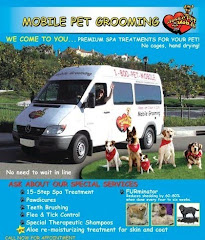
It seems to be a common problem with our pets, bad breath. But with a little effort, bad breath does not have to be a problem. The best way to keep your pet's mouth smelling nice and fresh is to brush their teeth. At Aussie Pet Mobile we use a dog-friendly, specially flavored toothpaste. You can buy dog toothpaste at your local pet store. If brushing doesn't eliminate the odors, there could be a medical problem. Just like in people, bad breath is a sign of dental disease and requires treatment. Some may believe that pets' mouths naturally clean themselves, but this is not the case. There are some natural enzyme systems in your pets mouth that help, but it will not keep your pet's mouth clean. Debris builds up on the teeth and requires brushing and rubbing.
Cats are also at risk for dental disease and it's not the smelly foods that they are eating that are causing the odor. It is reported that 85% of adult cats have periodontal disease, and that dental disease is the largest single cause of health problems in cats.
Signs your pet maybe suffering from dental disease:
• Bad breath and red gums (healthy gums will be a shrimp pink color)
• Pus oozing from gums
• Facial swelling
• Yellow or brown buildup on teeth
• Pain when eating or chewing
Daily oral hygiene rinses, dental diets and safe chew toys can also help keep your pet's mouth clean, but be sure to call your vet to discuss your pets dental health. Your vet can make recommendations to keep your pet free of periodontal disease.
Showing posts with label dog health. Show all posts
Showing posts with label dog health. Show all posts
Tuesday, August 31, 2010


Wednesday, August 26, 2009
Over-weight Dogs
In our grooming practice one of the biggest issues we come across with dogs is obesity. In fact, being a mobile groomer, we probably get more heavy dogs than a groom shop, because they are so difficult to transport. I guess the problem is a good one for our business, but in reality we would rather see healthy dogs than obese ones. Being over-weight usually leads to other health issues, and will take years off a dog’s life span. If owners realized over feeding their dogs mean shortening their lives, I wonder if they would change their feeding habits. Most people know when their dog is over-weight, but if you’re not sure, ask your vet. Usually if you can no longer feel the rib cage in a dog, it needs to lose weight.
Over-feeding your dog has a direct impact on their health. Obesity can lead to diabetes, heart disease, respiratory problems, osteoarthritis, digestive problems and some cancers. Experts estimate that about half of all dogs in the US are over-weight.
It seems most obese dogs are the result of being over loved. Often we show our affection for our dogs by giving them treats. Owners should know that treats should be limited, and that there are alternatives to regular dog treats that are much healthier and lower in calories. Just like with humans, calories are the main determination for weight gain. The good news is that we have direct control over how many calories our dogs get each day.
Instead of dog treats, try these alternatives recommended by my vet:
· Air-popped popcorn
· Raw baby carrots
· Plain rice cake, unsalted
· Raw or canned green beans
· Plain Cheerios
Or if you prefer dog biscuits, try the low calorie ones, like Eukanuba Canine Restricted Calorie Rewards, or Royal Canin’s Diet Canine Treats.
When you feed your dog at mealtime, measure the dog food in a small measuring cup. Make sure you know how much you are giving. If the dog continues to gain weight, reduce the amount. Experiment until you find what is right for your dog. That may or may not be what the dog food maker prints on their package. Not every dog is the same.
Settle on specific mealtimes for your dog, like once a day or twice a day. Never leave food out all the time. If your dog doesn’t eat right away, pick up the food and wait until the next scheduled feeding time to give more. Soon your dog will get used to the schedule and will eat their food at the right times. Regular meal times also make it easier for housetraining.
I’ve had customers tell me their dog must not be getting enough to eat because they “act hungry!” Of course your dog wants food whenever he can get it. Natural behavior is to eat what’s available. You as the human caregiver must understand what the dog cannot, that over feeding will almost surely lead to health problems and premature aging.
The best thing you can do for your dog is keep it in shape, with good feeding habits, exercise, and lots of attention. Your dog will be happy, and in turn you will benefit by getting to spend more time with your loyal companion.
Over-feeding your dog has a direct impact on their health. Obesity can lead to diabetes, heart disease, respiratory problems, osteoarthritis, digestive problems and some cancers. Experts estimate that about half of all dogs in the US are over-weight.
It seems most obese dogs are the result of being over loved. Often we show our affection for our dogs by giving them treats. Owners should know that treats should be limited, and that there are alternatives to regular dog treats that are much healthier and lower in calories. Just like with humans, calories are the main determination for weight gain. The good news is that we have direct control over how many calories our dogs get each day.
Instead of dog treats, try these alternatives recommended by my vet:
· Air-popped popcorn
· Raw baby carrots
· Plain rice cake, unsalted
· Raw or canned green beans
· Plain Cheerios
Or if you prefer dog biscuits, try the low calorie ones, like Eukanuba Canine Restricted Calorie Rewards, or Royal Canin’s Diet Canine Treats.
When you feed your dog at mealtime, measure the dog food in a small measuring cup. Make sure you know how much you are giving. If the dog continues to gain weight, reduce the amount. Experiment until you find what is right for your dog. That may or may not be what the dog food maker prints on their package. Not every dog is the same.
Settle on specific mealtimes for your dog, like once a day or twice a day. Never leave food out all the time. If your dog doesn’t eat right away, pick up the food and wait until the next scheduled feeding time to give more. Soon your dog will get used to the schedule and will eat their food at the right times. Regular meal times also make it easier for housetraining.
I’ve had customers tell me their dog must not be getting enough to eat because they “act hungry!” Of course your dog wants food whenever he can get it. Natural behavior is to eat what’s available. You as the human caregiver must understand what the dog cannot, that over feeding will almost surely lead to health problems and premature aging.
The best thing you can do for your dog is keep it in shape, with good feeding habits, exercise, and lots of attention. Your dog will be happy, and in turn you will benefit by getting to spend more time with your loyal companion.
Subscribe to:
Posts (Atom)